

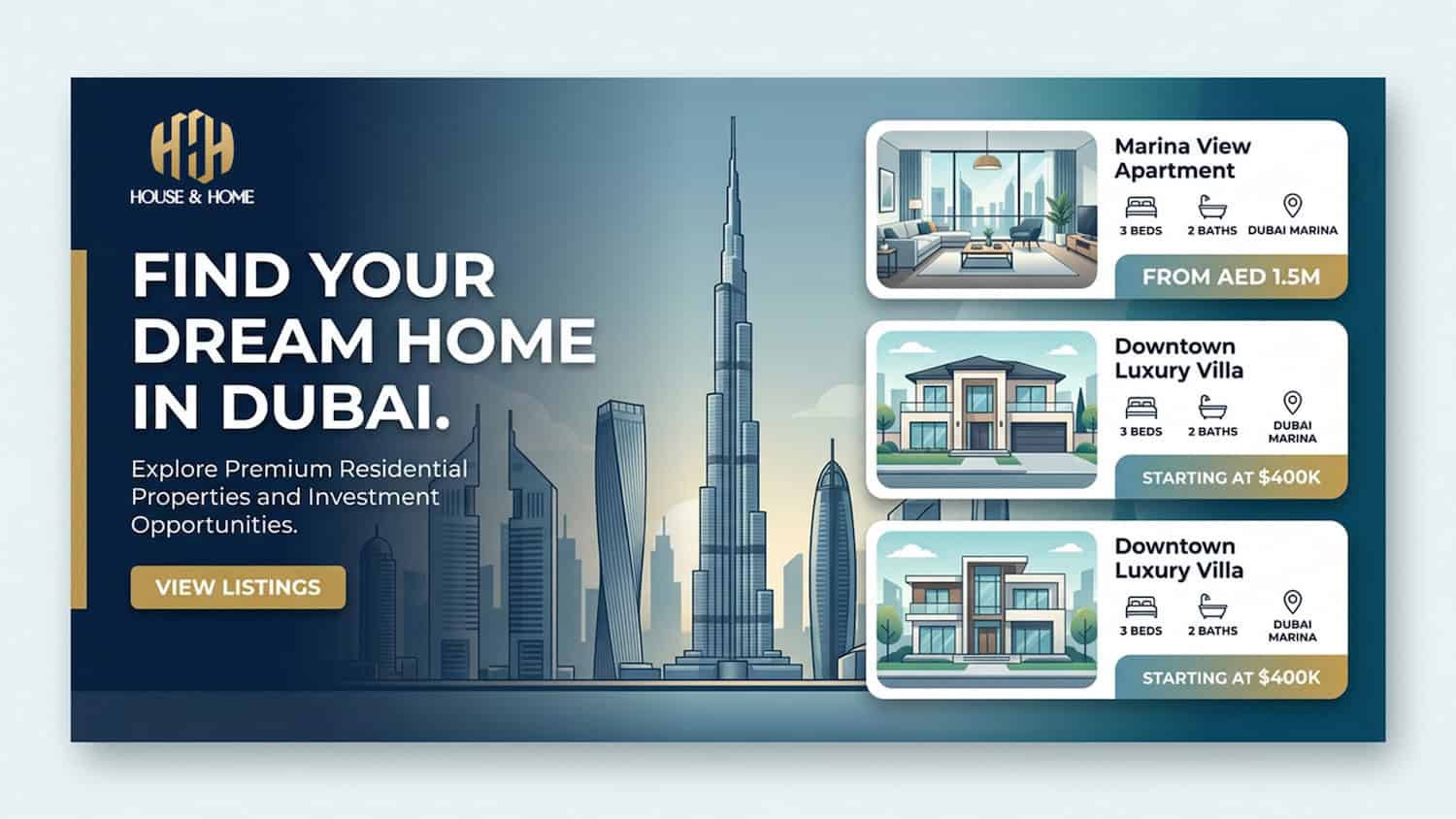
Real Estate Ads: Guide to Converting Property Advertising
Selling a property today isn’t just about staging a living room and snapping a few photos. It’s about getting the right real estate ads in front of the right buyer at the right moment, and that takes more than a “Beautiful 3BR Home for Sale” listing.
Whether you’re a real estate agent writing your tenth listing this month or a marketer running paid campaigns for a brokerage, this guide breaks down exactly how to create real estate ads that get clicks, generate leads, and close deals.
What Are Real Estate Ads?
Real estate ads are paid or organic promotional content designed to market properties, real estate services, or agent/agency brands to potential buyers, sellers, renters, and investors. Unlike generic advertising, effective real estate ads must capture high commercial intent, targeting people actively searching for homes, ready to list their property, or seeking investment opportunities.
In today’s competitive property market, the difference between a successful real estate ad and a wasted ad spend comes down to one critical factor: understanding and targeting buyer/seller intent.
Why Most Real Estate Ads Fail
Before getting into what works, it’s worth understanding what doesn’t. Most underperforming real estate ads share the same three problems:
- They lead with features, not benefits. “4 bedrooms, 2.5 baths, 2,400 sq ft” tells a buyer what’s there, it doesn’t tell them why it matters.
- They’re generic. Phrases like “won’t last long!” or “move-in ready” appear in thousands of listings and have stopped registering with buyers.
- They’re built for one platform only. An ad written for the MLS rarely performs well when copy-pasted into a Facebook or Instagram campaign.
Fixing these three issues alone puts you ahead of most listings in your market.
Why Intent-Driven Real Estate Ads Matter More Than Ever
Real estate transactions are high-value, high-consideration decisions. People don’t impulse-buy a $500,000 property. This means your advertising strategy must align with where prospects are in their buyer or seller journey.
The Three Levels of Real Estate Search Intent:
1. Informational Intent (Top of Funnel)
- “How much is my home worth”
- “Best neighborhoods in [Dubai]”
- “Should I rent or buy”
2. Commercial Investigation Intent (Middle of Funnel)
- “Real estate agents near me”
- “3 bedroom homes for sale in [Dubai Marina]”
- “Best mortgage rates 2026”
3. Transactional Intent (Bottom of Funnel – HIGHEST VALUE)
- “Homes for sale under $400k near me”
- “Sell my house fast [Dubai]”
- “Schedule home viewing [address]”
- “Pre-approved mortgage application”
Ads targeting transactional intent keywords convert at significantly higher rates because these users are ready to take action, not just browsing.

The Anatomy of a High-Converting Real Estate Ad
A real estate ad that converts typically has five components working together:
1. A Headline That Stops the Scroll
Your headline has about two seconds to earn attention. Instead of stating the obvious, lead with the single most compelling detail about the property.
- Weak: “Charming 3-Bedroom Home in Downtown”
- Strong: “Wake Up to Lake Views Every Morning, Downtown Walkability Included”
2. A Description Built Around Lifestyle
Buyers don’t buy square footage, they buy what life looks like in that square footage. For every feature you list, ask “so what?” until you land on the emotional payoff.
| Feature | Lifestyle Translation |
|---|---|
| Open-concept kitchen | “Host without missing the conversation” |
| Backyard with mature trees | “Morning coffee in your own shaded retreat” |
| 10-minute commute | “Get 40 minutes of your day back” |
| Finished basement | “A home theater, gym, or guest suite, your call” |
3. High-Quality Visuals
Listings with professional photography receive significantly more views and sell faster than those with amateur photos. At a minimum, include:
- Wide-angle, well-lit interior shots
- A drone or exterior shot showing the full property and neighborhood
- A short video walkthrough or virtual tour (especially important for out-of-town or relocating buyers)
4. Specific, Local Detail
“Close to everything” is meaningless. “Three blocks from Riverside Park and a five-minute walk to the Saturday farmers market” is specific, credible, and searchable.
5. A Clear Call-to-Action
Every ad should end with one obvious next step, not three.
- “Book a private showing this weekend”
- “Message us for the full virtual tour“
- “Call now – open house Saturday 1-3 pm”
High-Intent Real Estate Ad Keywords by Category
Buyer Intent Keywords
These target people are actively searching to purchase property:
- homes for sale near me
- [Dubai] real estate listings
- buy house [Jumeirah Village Circle]
- new construction homes for sale
- condos for sale downtown [Dubai]
- luxury homes for sale [Palm Jumeirah]
- first-time home buyer programs
- houses for sale with pool
- waterfront property for sale
- foreclosure homes for sale
Seller Intent Keywords
These capture homeowners ready to list:
- sell my house fast
- how much is my house worth
- best real estate agent to sell my home
- sell house without realtor
- cash offer for my house
- home value estimate [Dubai]
- list my property for sale
- top realtors near me for selling
Investor Intent Keywords
These target real estate investors and high-value clients:
- investment property for sale
- rental property for sale
- multi-family homes for sale
- commercial real estate for sale
- fix and flip properties
- cash flow rental properties
- 1031 exchange properties
- off-market real estate deals
Renter Intent Keywords
For property management and rental ads:
- apartments for rent near me
- houses for rent [Dubai]
- luxury apartments for rent
- pet-friendly rentals
- furnished apartments for rent
- short-term rental [Dubai]
- studio apartment for rent
Local Service Intent Keywords
Combine real estate terms with location modifiers for hyper-targeted ads:
- real estate agent in [Dubai]
- realtor near [Jumeirah Lake Towers]
- [Dubai] property management
- best real estate agency [Dubai]
- mortgage broker near me
Best Platforms for Real Estate Advertising
1. Google Ads (Search & Display)
Google Ads remains the gold standard for capturing high-intent real estate searches because it targets users actively typing transactional queries.
Best For: Capturing bottom-funnel buyer/seller intent
- Ad Formats: Search ads, Local Service Ads, Display remarketing, Performance Max
- Average CPC: $1-$10+ depending on market competitiveness
- Key Strategy: Bid aggressively on transactional keywords with location modifiers; use Real Estate Local Service Ads for verified lead generation
2. Facebook & Instagram Ads (Meta)
- Meta’s robust targeting allows you to reach specific demographics, life events (newly engaged, recently moved), and lookalike audiences based on past buyers.
- Best For: Visual property showcases, retargeting website visitors, lifestyle-based targeting
- Ad Formats: Carousel ads (multiple property photos), video walkthroughs, lead generation forms, Instant Experience ads
- Key Strategy: Use Lead Ads with pre-filled forms to reduce friction; target “life event” audiences like newly engaged or recently moved
3. Zillow, Realtor.com & Trulia (Real Estate-Specific Platforms)
These platforms have inherently high purchase intent since every visitor is actively searching for property.
- Best For: Maximum intent capture, direct property listing visibility
- Ad Formats: Premier Agent listings, featured listings, banner placements
- Key Strategy: Optimize listing descriptions with intent-driven keywords; invest in featured placement for competitive markets
4. YouTube Ads
Video content builds trust and allows virtual property tours, making it powerful for high-value listings.
- Best For: Luxury properties, neighborhood showcases, agent branding
- Ad Formats: Skippable in-stream ads, YouTube Shorts ads
- Key Strategy: Create cinematic property walkthrough videos targeting “homes for sale” search intent
5. TikTok Ads
Increasingly popular for reaching younger first-time buyers and showcasing property in engaging, authentic formats.
- Best For: First-time buyer segment, viral property showcases
- Ad Formats: In-feed video ads, branded hashtag challenges
- Key Strategy: Authentic, fast-paced property tours; leverage trending audio with real estate hooks
6. LinkedIn Ads
Best for commercial real estate and connecting with investors, developers, and corporate relocation decision-makers.
- Best For: Commercial real estate, investment properties, B2B real estate services
- Ad Formats: Sponsored content, message ads
- Key Strategy: Target by job title (CFO, Real Estate Director) and company size for commercial properties
SEO Strategy for Real Estate Listings
If you want organic traffic = not just paid reach, your listings and blog content need to be built around how buyers actually search.
Target Long-Tail, Local Keywords
Generic terms like “homes for sale” are extremely competitive. Long-tail, intent-rich keywords convert better and rank faster:
- “3 bedroom homes for sale near [school district]”
- “pet-friendly condos in [neighborhood]”
- “new construction homes under $500k in [city]”
Optimize Listing Pages, Not Just Print Ads
For any listing posted on your own website:
- Write a unique meta title and description for every property page (avoid duplicate boilerplate across listings)
- Use descriptive, keyword-rich image alt text (“modern kitchen with white quartz countertops” rather than “IMG_4821”)
- Add structured data (schema markup) for real estate listings so search engines can display price, address, and photos directly in results
- Keep page load speed fast, image-heavy listing pages are notorious for slow load times, which hurts both rankings and conversions
Build Local Authority with Supporting Content
Search engines reward sites that demonstrate local expertise. Neighborhood guides, “best places to live in [city] for families,” or market update posts all support your individual listings by building topical and geographic relevance.
High-Converting Real Estate Ad Copy Formulas
Formula 1: Urgency + Benefit + CTA
Just Listed: Stunning 4BR Home in [Neighborhood] Won’t last long at this price! Schedule your tour today.[Schedule Viewing Now]
Formula 2: Pain Point + Solution
Tired of Renting? Own Your Dream Home for Less Than Rent.
Find out how much home you qualify for in 60 seconds.[Get Pre-Approved Now]
Formula 3: Social Proof + Offer
Join 200+ Happy Homeowners This Year[City]’s Top-Rated Real Estate Team Makes Buying Easy[Browse Listings]
Formula 4: Question + Curiosity
What’s Your Home Really Worth in Today’s Market?
Get an instant, accurate home valuation – free, no obligation.[Get My Free Home Value]
Formula 5: Specific Numbers + Trust
Sold 47 Homes in [Neighborhood] This Year
Let our local expertise get you the best price.[See Recent Sales]
Real Estate Ad Copy Examples
Luxury Listing:
“Perched above the city skyline, this 4-bedroom penthouse pairs floor-to-ceiling glass with a private rooftop terrace, built for entertaining and engineered for privacy. Schedule your private viewing today.”
Starter Home:
“Your first home shouldn’t feel like a compromise. This move-in-ready 2-bedroom bungalow comes with a renovated kitchen, fenced yard, and a price that still leaves room to breathe. Tour it this weekend.”
Investment Property:
“Turnkey duplex in a high-demand rental corridor, both units leased through next year. Cash flow from day one. Full financials available on request.”
Common Mistakes to Avoid
- Overusing real estate jargon (“ROI,” “cozy” as a euphemism for small) that buyers either don’t understand or have learned to distrust
- Burying the price or omitting it entirely, which frustrates buyers and increases bounce rate
- Ignoring mobile formatting, the majority of property searches now happen on mobile, so test how your ad looks on a small screen before publishing
- Skipping a clear CTA, leaving an interested buyer unsure what to do next
- Using stock-photo-style staging language instead of describing the actual property in front of you

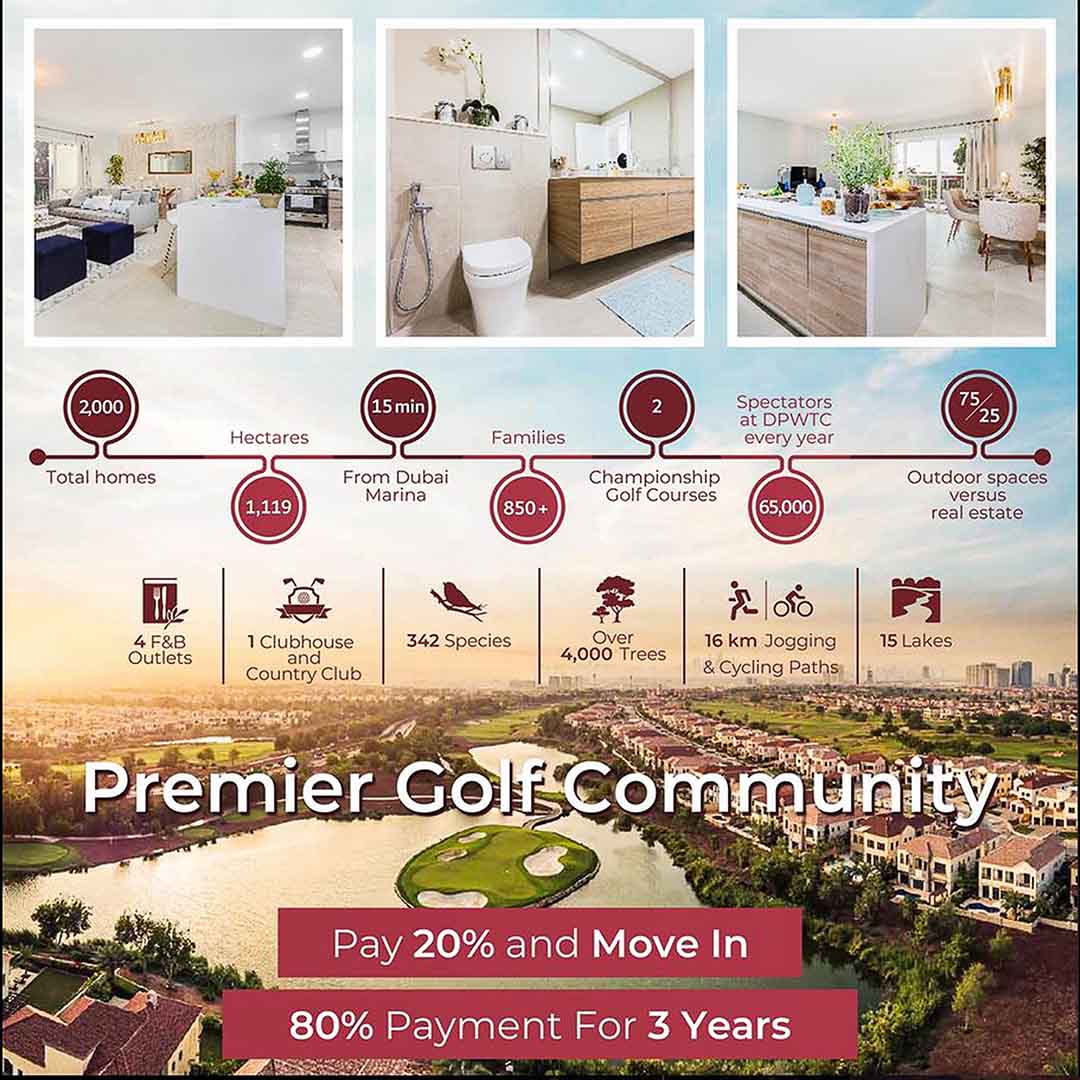
Dubai Real Estate Ads
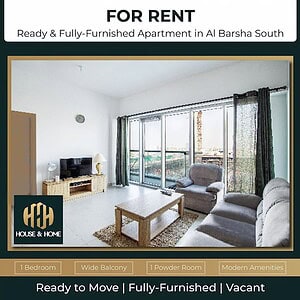
Real Estate Ad
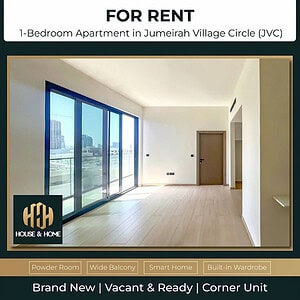
Dubai Real Estate Advertisement
Essential Elements of High-Converting Real Estate Ads
1. Compelling Visuals
- Use high-resolution professional photography (never stock photos for actual listings)
- Include drone/aerial shots for larger properties
- Add virtual staging for vacant homes
- Use video walkthroughs for listings above median market price
2. Clear, Specific Headlines
Generic: “Beautiful Home for Sale”
Intent-Optimized: “4BR/3BA Home in [Neighborhood] – $450K – Move-In Ready”
3. Location-Specific Targeting
Real estate is inherently local. Always include:
- City/neighborhood name in ad copy
- School district information (major decision factor for families)
- Proximity to key landmarks, transit, or employers
4. Strong, Action-Oriented CTAs
- “Schedule a Showing”
- “Get Instant Home Value”
- “Download Neighborhood Guide”
- “Speak to an Agent Today”
- “Calculate Your Mortgage Payment”
5. Trust Signals
- Years of experience
- Number of homes sold
- Client testimonials/reviews
- Professional certifications
- Local market expertise
6. Mobile Optimization
Over 70% of real estate searches happen on mobile devices. Ensure:
- Fast-loading landing pages
- Click-to-call buttons
- Mobile-friendly forms (minimal fields)
- Thumb-friendly navigation
Real Estate Ad Targeting Strategies by Audience
First-Time Homebuyers
- Demographics: Ages 25-35, recently married/engaged, renting
- Messaging Focus: Affordability, financing options, education-based content
- Best Platforms: Instagram, TikTok, Facebook
Move-Up Buyers
- Demographics: Ages 35-50, existing homeowners, growing families
- Messaging Focus: Space, school districts, lifestyle upgrades
- Best Platforms: Google Search, Facebook, YouTube
Luxury Buyers
- Demographics: High net worth, ages 40+, investment-minded
- Messaging Focus: Exclusivity, premium amenities, privacy, status
- Best Platforms: Instagram, YouTube, LinkedIn, premium real estate portals
Real Estate Investors
- Demographics: Ages 30-60, existing property owners, business-minded
- Messaging Focus: ROI, cash flow, cap rates, market appreciation data
- Best Platforms: LinkedIn, Google Search, BiggerPockets, investor-focused forums
Empty Nesters/Downsizers
- Demographics: Ages 55+, looking to downsize or relocate
- Messaging Focus: Low maintenance, accessibility, lifestyle communities
- Best Platforms: Facebook, Google Search
Retargeting Strategies for Real Estate Ads
Most property buyers view a listing 8-10 times before taking action. Retargeting is essential for capturing this extended consideration period.
Effective Retargeting Sequences:
- Day 1-3: Show the exact property they viewed (dynamic retargeting)
- Day 4-7: Show similar properties in the same price range/area
- Day 8-14: Showcase agent credibility/testimonials
- Day 15+: Offer incentive (free consultation, market report, mortgage calculator)
Platforms for Real Estate Retargeting:
- Google Display Network
- Facebook/Instagram Custom Audiences
- YouTube remarketing lists
Measuring Real Estate Ad Performance: Key Metrics
Awareness Metrics:
- Impressions
- Reach
- Video view rate
Engagement Metrics:
- Click-through rate (CTR) – aim for 2-5% in real estate
- Cost per click (CPC)
- Landing page bounce rate
Conversion Metrics (Most Important):
- Cost per lead (CPL)
- Lead-to-appointment rate
- Appointment-to-close rate
- Return on ad spend (ROAS)
Industry Benchmarks:
- Average real estate CPL: $30-$60 (varies by market)
- Lead-to-close conversion: 1-3% typically
- Quality leads from intent-driven ads convert 3-5x higher than broad targeting
Common Real Estate Advertising Mistakes to Avoid
1. Targeting Too Broad an Audience
Generic “anyone interested in real estate” targeting wastes budget. Always layer demographic, geographic, and intent signals.
2. Ignoring Mobile Experience
Slow-loading landing pages kill conversions when most searches happen on mobile.
3. Weak or Missing CTAs
Every ad needs ONE clear action you want users to take.
4. Not Using Video
Static images underperform video walkthroughs by significant margins in engagement.
5. Generic Ad Copy
“Beautiful home for sale” doesn’t capture intent. Be specific about price, location, and unique selling points.
6. Neglecting Retargeting
Real estate decisions take weeks/months. Single-touch campaigns miss the majority of conversions.
7. Poor Landing Page Alignment
If your ad promotes a specific property, the landing page must show that exact property, not a generic listings page.
Real Estate Ad Budget Allocation Framework
For a balanced, intent-driven advertising strategy:
40% – Bottom-Funnel (Transactional Intent)
Google Search ads on high-intent keywords, Zillow Premier Agent
35% – Middle-Funnel (Commercial Investigation)
Facebook/Instagram targeted campaigns, retargeting
25% – Top-Funnel (Awareness/Branding)
YouTube, Display Network, content marketing support
Future Trends in Real Estate Advertising
AI-Powered Personalization: Dynamic ads that automatically adjust property recommendations based on user behavior
Virtual Reality Tours: Immersive VR property walkthroughs integrated directly into ad experiences
Voice Search Optimization: Increasing “homes for sale near me” voice queries requiring conversational keyword targeting
Predictive Lead Scoring: AI identifying highest-intent prospects before they even submit a form
Hyper-Local Geofencing: Targeting ads to users physically near open houses or specific neighborhoods
Action Plan: Launching Your First Intent-Driven Real Estate Ad Campaign
- Define your target buyer/seller persona with specific demographics and intent signals
- Research high-intent keywords specific to your market and property types
- Choose 2-3 platforms based on your audience (start focused, expand later)
- Create platform-specific ad creative (don’t reuse the same ad across all channels)
- Set up conversion tracking before launching any campaign
- Start with a testing budget ($500-1000) to identify winning combinations
- Build retargeting audiences from day one
- Review performance weekly and optimize based on cost-per-lead data
- Scale winning campaigns and pause underperformers
- Continuously test new ad creative to combat ad fatigue
Conclusion on real estate ads
Successful real estate ads isn’t about casting the widest net, it’s about precisely matching your message to user intent at every stage of their property journey. By focusing on high-intent keywords, platform-specific strategies, and conversion-optimized creative, real estate professionals can significantly reduce wasted ad spend while increasing qualified leads that actually convert into closed transactions.
Whether you’re an individual agent, brokerage, property developer, or real estate investor, the principles remain the same: understand intent, target precisely, create compelling creative, and continuously optimize based on data.


Leave A Comment