

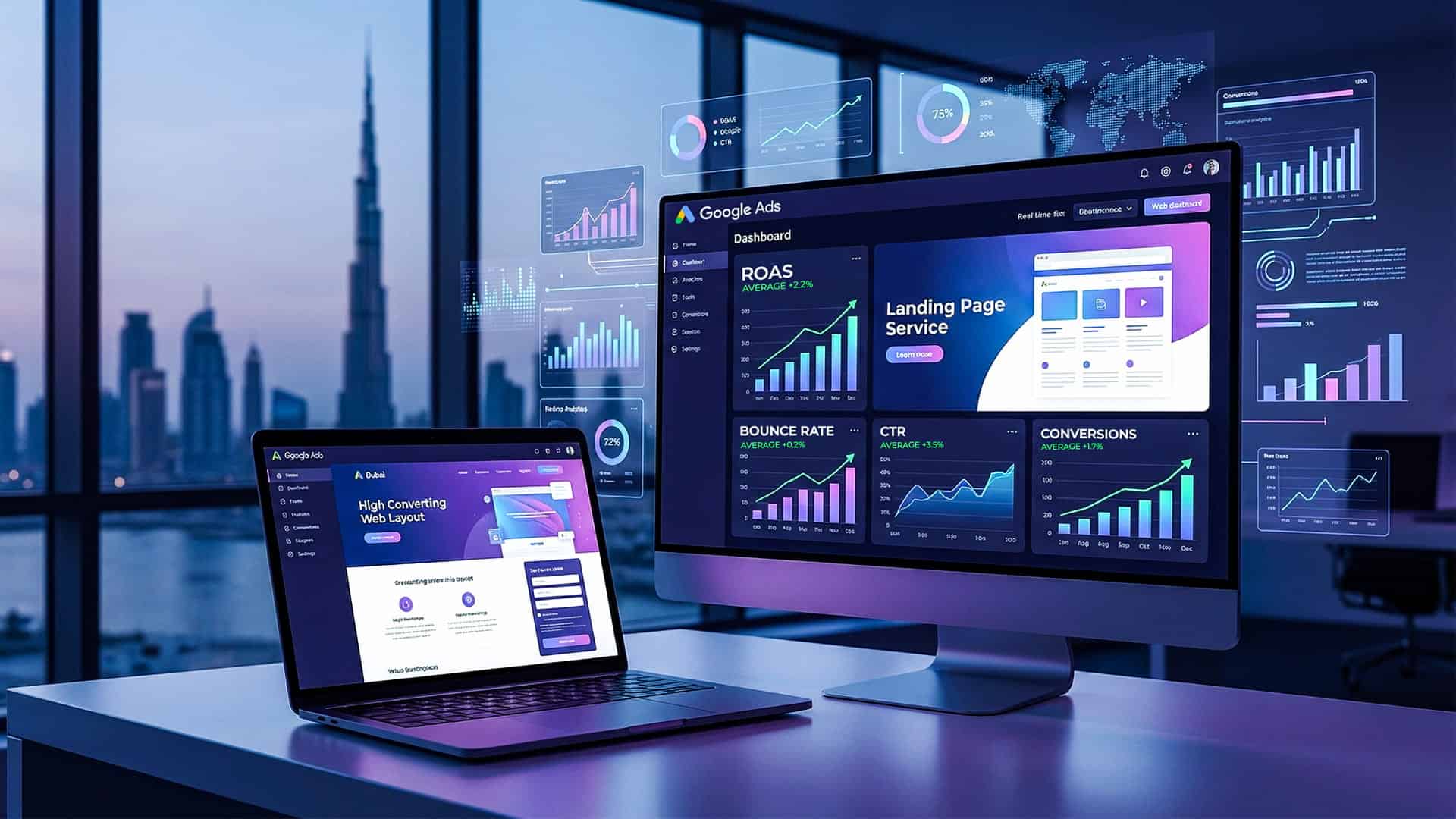
Google Ads Landing Page: How to Build a High-Converting Landing Page for PPC
A successful Google Ads campaign does not end when someone clicks your advertisement. The real opportunity begins when the visitor arrives on your website.
Your Google Ads landing page can determine whether that visitor becomes a lead, customer, property buyer, booking, or sale, or simply clicks the back button.
A well-designed landing page for Google Ads should match the user’s search intent, communicate the value of your offer quickly, build trust, and make it easy for visitors to take the desired action.
For businesses investing in pay-per-click advertising, Google Ads landing page optimization is therefore just as important as keyword research, ad copy, bidding strategy, and audience targeting.
What Is a Google Ads Landing Page?
A Google Ads landing page is a dedicated webpage that users reach after clicking a Google Search, Display, Performance Max, or other Google Ads advertisement.
Unlike a normal website homepage, a landing page is typically designed around a specific advertising campaign, keyword, product, service, or offer.
For example, a company advertising:
“Luxury Apartments for Sale in Dubai” could send users to a dedicated landing page featuring:
- Luxury apartments in Dubai
- Available properties
- Starting prices
- Payment plans
- Project locations
- Property images
- Developer information
- Key amenities
- Investment benefits
- A lead form
- WhatsApp or call-to-action buttons
The goal is simple: turn advertising traffic into measurable business results.
Why Are Landing Pages Important for Google Ads?
Google Ads can generate highly targeted traffic, but paying for clicks does not guarantee conversions.
A visitor might click an advertisement because the headline promises exactly what they are looking for. If the landing page then provides unrelated information, loads slowly, hides the offer, or makes contacting the business difficult, the advertising budget can be wasted.
An optimized landing page can help businesses:
- Increase conversion rates
- Improve the user experience
- Generate more qualified leads
- Reduce wasted advertising spend
- Improve campaign performance
- Strengthen message consistency
- Increase return on ad spend
- Support better Google Ads performance
The landing page should therefore be considered part of the advertising campaign, not a separate website project.
Google Ads Landing Page vs. Homepage
One of the most common mistakes advertisers make is sending all Google Ads traffic to their homepage.
A homepage is designed to introduce a business and provide access to multiple sections of a website.
A PPC landing page, however, should have a much more focused objective.
| Homepage | Google Ads Landing Page |
|---|---|
| General business information | Specific campaign information |
| Multiple navigation options | Focused user journey |
| Multiple services/products | One primary offer |
| General messaging | Keyword and ad-specific messaging |
| Multiple CTAs | One primary CTA |
| Designed for exploration | Designed for conversion |
For example, someone searching for “Dubai real estate lead generation” should ideally land on a page specifically discussing real estate lead generation rather than a generic digital marketing homepage.
What Makes a Good Google Ads Landing Page?
A high-converting landing page typically combines several important elements.
Tools such as Google PageSpeed Insights and Chrome’s Lighthouse can help identify technical performance problems.
Speed optimization is particularly important for mobile PPC traffic because users arriving from advertisements may have little patience for a slow page.
1. Match the Landing Page to Search Intent
Search intent is one of the most important factors in PPC landing page optimization.
Consider a user searching for:
“Google Ads agency Dubai”
They are likely looking for a service provider.
A relevant landing page could include:
- Google Ads management
- Campaign setup
- Keyword research
- Conversion tracking
- PPC optimization
- Case studies
- Pricing or consultation information
- Lead generation CTA
Sending that user to a generic “Digital Marketing Services” page creates unnecessary friction.
The closer the landing page matches the user’s intent, the easier it becomes for the visitor to understand that they are in the right place.
2. Keep the Message Consistent With the Advertisement
Your Google Ad makes a promise.
Your landing page needs to continue that promise.
For example:
Google Ad:
Luxury Apartments in Dubai
Starting From AED 1.2M
Book a Private Viewing
The landing page should immediately reinforce the same message.
If the visitor clicks the ad and sees:
Welcome to Our Real Estate Company
the connection is weak.
Instead, the landing page headline could say:
Luxury Apartments in Dubai From AED 1.2M
This creates message match between the keyword, advertisement, and landing page.
3. Create a Strong Landing Page Headline
Your headline should tell visitors what they are getting almost immediately.
A good Google Ads landing page headline should generally be:
- Clear
- Specific
- Relevant
- Benefit-oriented
- Easy to understand
Weak:
Welcome to Our Website
Better:
Generate More Qualified Real Estate Leads in Dubai
Even better when appropriate:
Generate Qualified Dubai Real Estate Leads With Google & Meta Ads
The headline should communicate the primary value proposition without forcing users to read several paragraphs.
4. Write a Clear Value Proposition
The value proposition answers a simple question:
Why should the visitor choose you?
Depending on the business, this could include:
- Competitive pricing
- Premium service
- Faster delivery
- Specialized expertise
- Exclusive inventory
- Free consultation
- Flexible payment plans
- Industry experience
- Guaranteed response times where legitimately offered
For a real estate campaign, for example:
Discover premium Dubai properties with flexible payment plans and investment opportunities in some of the city’s most sought-after communities.
The value proposition should be relevant to the campaign rather than generic corporate messaging.
5. Use One Primary Call to Action
A landing page should make the next step obvious.
Examples of effective CTAs include:
- Get a Free Quote
- Request a Callback
- Book a Consultation
- Download the Brochure
- Schedule a Viewing
- Get Property Details
- Speak to an Expert
- Request Pricing
- Start Your Free Consultation
For lead-generation campaigns, avoid making users search for the contact form.
Your CTA should be visible throughout the landing page where appropriate
6. Keep Lead Forms Simple
Long forms can discourage conversions.
Only request information that you genuinely need.
For example, a basic lead-generation form might ask for:
- Name
- Phone number
- Requirement
For higher-value transactions, additional qualification questions can be useful.
For example, a Dubai real estate campaign could ask:
- Preferred property type
- Budget
- Preferred location
- Buying timeframe
The right number of fields depends on the campaign and lead quality requirements.
More leads are not always better leads.
A good landing page should balance conversion volume with lead quality.
7. Add Trust Signals
Visitors may hesitate to submit their information to an unfamiliar company.
Trust signals can reduce that hesitation.
Depending on your business, consider including:
- Customer testimonials
- Google reviews
- Client logos
- Certifications
- Awards
- Case studies
- Years of experience
- Industry memberships
- Security information
- Company registration details
- Media coverage
For a property campaign, trust can also be strengthened through:
- Developer information
- Project details
- Location information
- Construction status
- Payment plan
- Handover information
- Verified property details
Avoid adding fake reviews, exaggerated claims, or unverifiable statistics.
8. Use High-Quality Images and Video
Visual content can be particularly important for industries such as:
- Real estate
- Hospitality
- Automotive
- Travel
- Retail
- Architecture
- Interior design
However, images should support conversion rather than slow down the page.
Compress images appropriately and use modern formats where practical.
For example, a real estate landing page could feature:
- Hero property image
- Interior photography
- Amenities
- Location
- Floor plans
- Lifestyle imagery
- Short property video
The visual hierarchy should always support the main CTA.
9. Make Your Google Ads Landing Page Mobile-Friendly
A large percentage of paid search traffic can come from mobile devices.
Your landing page should therefore be designed for mobile users first, not simply shrunk from a desktop design.
Check:
- Font size
- Button size
- Form usability
- Image loading
- Navigation
- Page spacing
- Sticky CTA functionality
- WhatsApp integration
- Phone links
A mobile visitor should be able to understand the offer and submit an inquiry without excessive scrolling or zooming.
10. Improve Landing Page Speed
A slow landing page can negatively affect the user experience and campaign efficiency.
Important areas to review include:
- Image compression
- JavaScript
- CSS
- Third-party scripts
- Hosting performance
- Caching
- CDN configuration
- Font loading
- Video embeds
- Tracking scripts
Google Ads Landing Page and Quality Score
Google evaluates several components of Search campaigns, including landing page experience as part of the broader Quality Score system.
A relevant, useful landing page can therefore contribute to a stronger overall advertising experience.
Important considerations include:
- Relevance to the keyword
- Relevance to the advertisement
- Useful and original content
- Transparency
- Easy navigation
- Mobile usability
- Page loading performance
- Clear business information
However, advertisers should not think of landing page optimization simply as a way to increase Quality Score.
The ultimate objective should be:
Better user experience + better conversion rate + better business results.
Keyword Relevance on Google Ads Landing Pages
Your landing page should naturally reflect the keywords you’re targeting.
Suppose your campaign targets:
Primary keyword:
Google Ads agency Dubai
Relevant supporting terms might include:
- Google Ads management Dubai
- PPC agency Dubai
- Google Search Ads
- Google Ads management
- PPC campaign management
- Google Ads lead generation
These terms can be incorporated naturally into headings, body copy, FAQs, service descriptions, and supporting content.
Do not stuff keywords unnaturally into the page.
Google Ads landing pages should be written primarily for the user.
Landing Page Structure for Google Ads
A simple high-converting landing page structure can look like this:
1. Hero Section
Headline
Clear statement of the offer.
Supporting copy
Explain the main benefit.
Primary CTA
Get a Quote / Book a Consultation / Request Details.
2. Key Benefits
Show three to five important benefits.
3. Product or Service Details
Explain exactly what the visitor receives.
4. Social Proof
Testimonials, reviews, statistics, case studies, or client logos.
5. Features or Benefits
Provide additional reasons to convert.
6. How It Works
Explain the process in three or four simple steps.
7. FAQ
Answer common objections.
8. Final CTA
Repeat the primary conversion action.

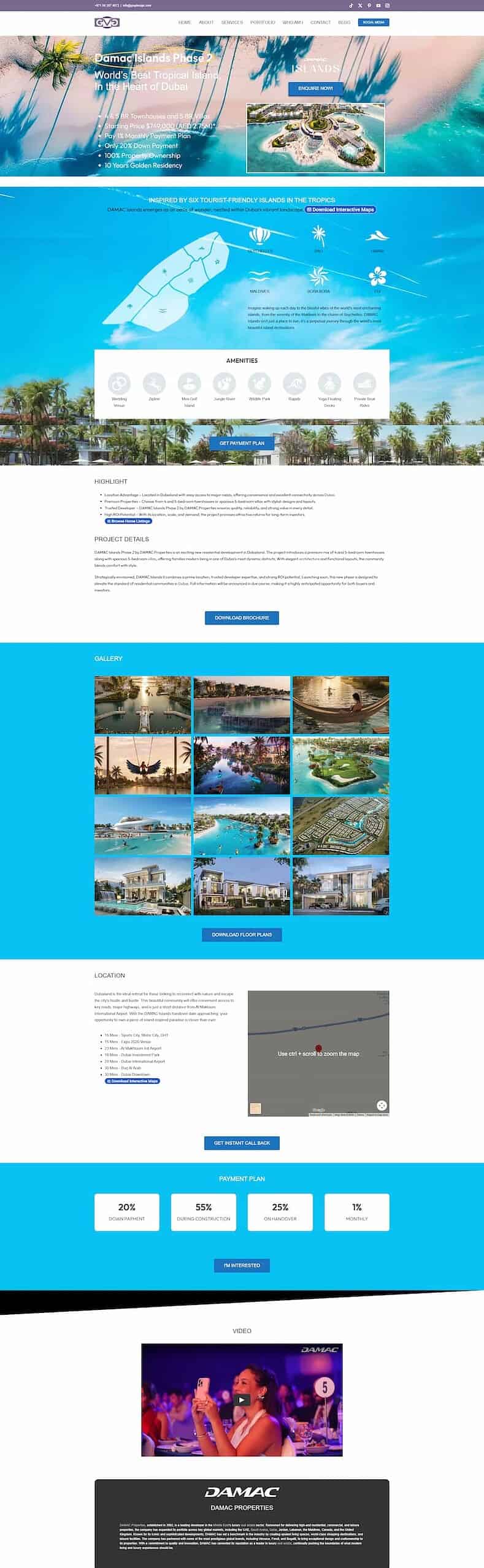
Example Google Ads Landing Page for Real Estate
Imagine you’re advertising:
“Apartments for Sale in Dubai”
A landing page could be structured like this:
Hero
Apartments for Sale in Dubai
Discover premium apartments with attractive payment plans and investment opportunities.
[Get Property Details]
Property Highlights
- Studios to 4-bedroom apartments
- Prime Dubai locations
- Flexible payment plans
- Modern amenities
- Investment opportunities
Why Invest in Dubai?
Explain the property’s investment proposition and relevant market benefits.
Available Properties
Show selected units with:
- Property type
- Size
- Price
- Location
- Payment plan
Location
Include a map and explain nearby:
- Metro stations
- Schools
- Shopping malls
- Business districts
- Airports
- Tourist attractions
Why Choose Us?
Add:
- Local market expertise
- Property specialists
- Verified listings
- Personalized consultations
Lead Form
Request Property Details
Name
Phone
Email
Property preference
[Request Information]
Google Ads Landing Page Best Practices
Here is a practical checklist for advertisers.
Before Launch
- Define the conversion goal
- Identify the target audience
- Research search intent
- Select target keywords
- Match landing page content to the ad
- Write a strong headline
- Create a clear CTA
- Optimize the form
- Add trust signals
- Optimize mobile experience
- Compress images
- Install conversion tracking
After Launch
Monitor:
- Click-through rate
- Conversion rate
- Cost per conversion
- Cost per lead
- Lead quality
- Bounce/engagement signals
- Search terms
- Device performance
- Geographic performance
- Landing page performance
Don’t optimize based on clicks alone.

How to Improve Google Ads Landing Page Conversion Rate
If your campaign is generating clicks but not enough conversions, investigate the entire user journey.
Problem: High Clicks, Low Conversions
Possible causes include:
- Poor message match
- Weak offer
- Slow page
- Complicated form
- Poor mobile experience
- Wrong audience
- Wrong keywords
- Weak CTA
- Lack of trust
- Unclear pricing
- Poor-quality traffic
Test one major variable at a time where possible.
For example, create two versions:
Version A:
“Get a Free Property Consultation”
Version B:
“Request Dubai Property Prices”
Then compare conversion and lead-quality data.
A/B Testing Google Ads Landing Pages
A/B testing can help identify which landing page elements generate better results.
Potential test variables include:
- Headlines
- CTA wording
- Button placement
- Form length
- Hero image
- Testimonials
- Pricing presentation
- Offer
- Page layout
- Social proof
For example:
A: Get a Free Quote
B: Request Your Free Estimate
The winner should be determined using meaningful conversion data rather than assumptions.
Google Ads Landing Page for Lead Generation
Lead-generation landing pages should remove unnecessary distractions.
The page should answer four questions quickly:
- What are you offering?
- Why should I choose it?
- Why should I trust you?
- What should I do next?
If a visitor has to search for these answers, the page is likely creating unnecessary friction.
Google Ads Landing Pages for Different Industries
Different industries require different approaches.
Real Estate
Focus on:
- Property details
- Prices
- Payment plans
- Location
- Developer information
- Floor plans
- Investment potential
- Viewing CTA
B2B Services
Focus on:
- Business problem
- Solution
- Benefits
- Case studies
- Industry expertise
- ROI
- Consultation CTA
E-commerce
Focus on:
- Product images
- Price
- Reviews
- Benefits
- Availability
- Shipping
- Returns
- Purchase CTA
Healthcare
Focus on:
- Services
- Credentials
- Trust
- Location
- Appointment availability
- Clear booking CTA
Hospitality
Focus on:
- Rooms
- Amenities
- Location
- Packages
- Availability
- Reviews
- Booking CTA
Google Ads Landing Page SEO Best Practices
Although PPC landing pages primarily support paid advertising, SEO fundamentals can still be valuable.
Consider optimizing:
- Page title
- H1 heading
- Meta description
- URL
- Heading structure
- Relevant keywords
- Internal links where useful
- Image alt text
- Core Web Vitals
- Mobile usability
- Structured data where appropriate
However, don’t turn a conversion-focused PPC landing page into a generic SEO article.
The page should still serve its primary advertising objective.
Should You Use a Separate Landing Page for Every Google Ads Campaign?
Not necessarily.
However, creating dedicated landing pages for different high-intent campaigns can significantly improve relevance.
For example, a digital marketing company could have separate landing pages for:
- Google Ads Management
- Meta Ads Management
- Real Estate Lead Generation
- SEO Services
- Social Media Marketing
- Web Design
This allows the advertising message and landing page content to be much more closely aligned.
For larger campaigns, landing pages can even be created around specific services, locations, products, or audience segments.
Google Ads Landing Page Conversion Tracking
You cannot effectively optimize what you cannot measure.
Make sure important conversion actions are tracked.
These might include:
- Form submissions
- Phone calls
- WhatsApp clicks
- Brochure downloads
- Appointment bookings
- Purchases
- Quote requests
- Email clicks
For lead-generation campaigns, it is also useful to track what happens after the lead is submitted.
A campaign generating 500 cheap leads is not necessarily better than a campaign generating 100 qualified leads.
Your real KPI may be:
Cost per qualified lead
rather than simply:
Cost per lead.
Google Ads Landing Page Mistakes to Avoid
Sending All Traffic to the Homepage
Generic pages rarely provide the relevance of a dedicated landing page.
Using Too Many CTAs
Multiple competing actions can confuse visitors.
Hiding the Form
If lead generation is the goal, make the form easy to find.
Writing Too Much Above the Fold
Visitors should understand the offer quickly.
Ignoring Mobile Users
A desktop-perfect page can still perform poorly on smartphones.
Using Low-Quality Images
Poor visuals can reduce perceived credibility.
Making Unrealistic Claims
Avoid exaggerated claims that can damage trust and advertising compliance.
Forgetting Conversion Tracking
Without accurate tracking, optimization becomes guesswork.
How Much Does a Google Ads Landing Page Cost?
The cost of creating a landing page varies considerably depending on the project.
A basic landing page may involve:
- Template customization
- Copywriting
- Basic design
- Lead form
- Tracking setup
A more advanced landing page may require:
- Custom UX/UI design
- Professional copywriting
- Conversion-rate optimization
- CRM integration
- WhatsApp automation
- Dynamic content
- Advanced analytics
- A/B testing
- Custom development
For businesses spending thousands of dirhams on Google Ads every month, investing in a professionally designed landing page can be worthwhile because even a modest improvement in conversion rate can have a significant impact on campaign economics.
How a Google Ads Agency Can Help
A Google Ads specialist or PPC agency can help connect the entire advertising funnel:
Keyword → Ad → Landing Page → Lead → Sales
This is important because improving only one part of the funnel may not solve the underlying problem.
For example:
Excellent keywords + poor landing page = wasted clicks
Excellent landing page + irrelevant keywords = poor-quality traffic
Excellent ads + weak offer = low conversion rate
Cheap leads + poor qualification = poor sales results
The strongest campaigns optimize the entire journey.
Final Google Ads Landing Page Checklist
Before launching your campaign, ask:
Relevance
- Does the page match the Google search?
- Does the headline match the advertisement?
- Does the content address the user’s intent?
Conversion
- Is there one clear primary CTA?
- Is the form easy to complete?
- Is the offer compelling?
Trust
- Are testimonials or reviews available?
- Is the business clearly identified?
- Are important claims supported?
Technical
- Is the page mobile-friendly?
- Does it load quickly?
- Is HTTPS enabled?
- Is conversion tracking working?
Optimization
- Are Google Ads conversions configured?
- Are calls and forms tracked?
- Can lead quality be measured?
- Is A/B testing possible?
If the answer to these questions is yes, you have a much stronger foundation for a successful PPC campaign.
The Most Important Landing Page KPIs to Track and Report
When reporting on the performance of a Google Ads / PPC landing page, your KPIs should reflect both business impact (leads, revenue, efficiency) and user experience/technical performance (conversion friction, page speed). Here is a breakdown of the most important landing page KPIs to track and report, categorized for clarity:
1. Core Business & Conversion KPIs (The Bottom Line)
These are the primary metrics stakeholders and clients care about most.
Conversion Rate (CVR):
Formula: (Total Conversions ÷ Total Page Visits) × 100
Why it matters: Measures how effectively the landing page converts paid traffic into leads, sales, or sign-ups.
Cost Per Lead (CPL) / Cost Per Acquisition (CPA):
Formula: Total Ad Spend ÷ Total Conversions
Why it matters: Determines the financial efficiency of the landing page in driving business results.
Total Conversions:
Definition: The total count of completed target actions (form submits, phone calls, WhatsApp button clicks, brochure downloads).
Why it matters: Provides the raw volume of generated business opportunities.
Return on Ad Spend (ROAS) / Pipeline Value:
Formula: (Revenue Generated from Leads ÷ Total Ad Spend) × 100
Why it matters: Connects landing page performance directly to revenue and ROI (especially critical for high-ticket industries like real estate, financial services, or B2B).
2. Engagement & User Interaction KPIs
These metrics show how visitors interact with your page and help identify conversion friction.
Form Start vs. Form Completion Rate:
Why it matters: Tracks how many users started filling out your lead form versus how many completed it. High drop-off indicates the form has too many fields, confusing questions, or technical issues.
CTA Click-Through Rate (CTR):
Why it matters: Measures clicks on specific on-page Call-to-Action buttons (e.g., “Request Callback”, “Download Brochure”, “Chat on WhatsApp”).
Engagement Rate (GA4) / Bounce Rate:
Why it matters: In Google Analytics 4, Engagement Rate measures sessions that lasted >10 seconds, had a conversion, or had 2+ pageviews. Low engagement suggests a mismatch between the ad copy and the landing page content (poor message match).
Scroll Depth:
Why it matters: Shows how far down the page users travel (e.g., 25%, 50%, 75%, 100%). If users drop off before reaching key sections (testimonials, pricing, CTA), your page hierarchy or above-the-fold content needs adjustment.
Average Time on Page:
Why it matters: Indicates whether users are consuming your value proposition and reading key content or bouncing immediately.
3. Google Ads & Quality Metrics
These KPIs link landing page performance directly to campaign cost efficiency within Google Ads.
Landing Page Experience Rating (Google Ads):
Status: Above Average, Average, or Below Average.
Why it matters: Directly impacts your Google Ads Quality Score. A “Below Average” rating increases your Cost Per Click (CPC) and lowers ad rank.
Average Cost Per Click (CPC):
Why it matters: High-performing, relevant landing pages lower your average CPC, allowing you to get more traffic for the same budget.
4. Technical & Device Metrics
Technical performance directly impacts conversion rates, especially on mobile devices.
Page Load Time / Core Web Vitals (LCP, INP, CLS):
Why it matters: Every second delay in mobile load time can drop conversions by up to 20%.
Conversion Rate by Device (Mobile vs. Desktop):
Why it matters: Highlights if the mobile version of the landing page is underperforming compared to desktop, signaling responsive design or usability issues.
Recommended KPI Reporting Structure
When building a dashboard or weekly report, group your metrics into three tiers:
Executive Summary: Ad Spend, Total Leads/Conversions, Cost Per Lead (CPL), Overall Conversion Rate (CVR).
Behavioral Insights: Form Completion Rate, Top Clicked CTAs, Mobile vs. Desktop CVR, Scroll Depth.
Optimization / Action Items: A/B testing results (e.g., Headline A vs. Headline B), page load speed improvements, and recommended copy or form tweaks.
Conclusion on Google Ads Landing Page
A Google Ads campaign is only as strong as the experience that follows the click.
A high-converting Google Ads landing page should be relevant to the user’s search, consistent with the advertisement, fast on mobile devices, easy to navigate, trustworthy, and focused on a clear conversion goal.
Whether you’re advertising real estate in Dubai, professional services, e-commerce products, healthcare, hospitality, or B2B solutions, a dedicated PPC landing page can help turn paid traffic into measurable business opportunities.
The winning formula is not simply:
More clicks.
It is:
Relevant traffic + relevant landing page + strong offer + clear CTA + accurate tracking = better Google Ads performance.

Leave A Comment