

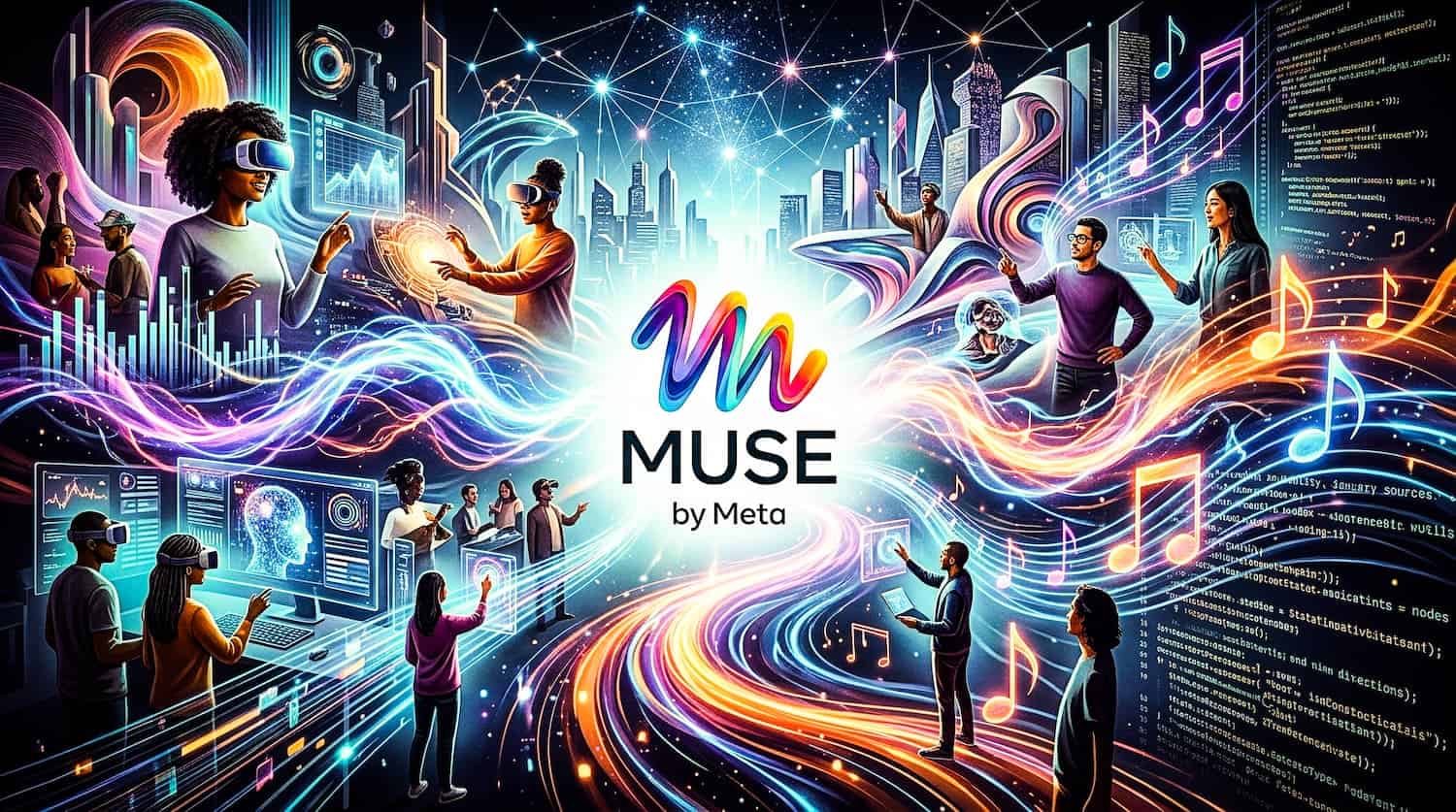
Meta’s Muse: The Next Generation of Personal AI and Creative Intelligence
Meta’s Muse AI is a new generation of artificial intelligence technology from Meta that moves beyond traditional chatbots toward AI systems capable of reasoning, creating, planning, and taking action. Developed by Meta Superintelligence Labs, the Muse family includes technologies such as Muse Spark, Muse Image, Muse Video, and the Muse personal AI agent.
Unlike conventional AI assistants that primarily answer questions, Meta’s vision for Muse is to create AI that can understand a person’s goals, work across digital services, generate creative content, and complete tasks on the user’s behalf.
Meta introduced its dedicated Muse personal AI agent in September 2026, describing it as a personal AI designed to help people manage tasks and long-term goals.
What Is Meta’s Muse AI?
Meta’s Muse is an AI ecosystem designed around the concept of personal AI and agentic artificial intelligence.
The technology is intended to move AI from a question-and-answer interface toward a system that can understand context and perform multi-step activities.
Meta describes its personal Muse as an AI agent that can:
- Understand personal goals and preferences
- Plan tasks and projects
- Perform actions on a user’s behalf
- Work across connected applications
- Browse the web
- Handle certain forms and customer-service tasks
- Remember information that matters to the user
- Suggest actions proactively
- Generate and work with creative content
The personal Muse experience is available through the Muse app and, in supported markets, through WhatsApp. Meta says the system is powered by Muse Spark, its model designed for real-world agentic work.
Meta Muse vs. Traditional AI Chatbots
Traditional generative AI generally works on a simple model:
User asks → AI responds
Agentic AI introduces another layer:
User provides a goal → AI plans → AI performs tasks → AI reports the result
This distinction is important for digital marketing, business automation, productivity, and content creation.
For example, instead of asking an AI assistant:
“How can I plan a marketing campaign?”
An agentic system could potentially help turn that objective into a series of actions, such as researching information, creating a plan, preparing content, organizing tasks, and working with connected applications.
Meta has positioned Muse around this type of goal-oriented interaction.
Muse Spark: The Intelligence Behind Meta AI
Muse Spark is one of the foundational models in Meta’s Muse family.
Meta introduced Muse Spark in April 2026 as the first model in a new series developed by Meta Superintelligence Labs. It was designed for complex reasoning and multimodal tasks and became the foundation for newer Meta AI capabilities.
Muse Spark can work with different types of information rather than being limited to text. Meta has described capabilities involving:
- Complex reasoning
- Visual understanding
- Image-related tasks
- Recommendations
- Coding
- Research
- Planning
- Multimodal interactions
Meta subsequently introduced Muse Spark 1.1, expanding its ability to plan, use connected applications, and follow through on tasks.
In September 2026, Meta also announced Muse Spark 1.3, continuing the development of the Muse model family.
Muse Image: Meta’s AI Image Generation Model
One of the most important creative technologies in the Muse ecosystem is Muse Image.
Introduced in July 2026, Muse Image is Meta Superintelligence Labs’ first image-generation model. Meta designed it to follow complex instructions, perform precise edits, and combine multiple visual references.
Muse Image differs from a basic text-to-image generator because it incorporates reasoning and agentic capabilities.
According to Meta, Muse Image can use tools such as search and coding, refine its own generations, and work with multiple references before producing the final result.
Key Muse Image Features
Muse Image can be used for:
- AI image generation
- Image editing
- Background removal
- Creative transformations
- Combining multiple images
- Visual concept development
- Image-based storytelling
- Infographics
- Social media content
- Room redesign concepts
- Product visualization
Another notable capability is its ability to generate legible text inside images, which can be useful for visual guides, posters, diagrams, and other marketing materials.
Users can also mark up an existing image to indicate changes and continue refining the result through conversation.
Muse Video: AI Video Generation
Meta has also introduced Muse Video, a video-generation model developed from the same general technology foundation as Muse Image.
Meta says Muse Video is designed for high visual fidelity and includes native audio support. The company has described it as a technology being developed for creators and Meta AI experiences.
The development of Muse Video demonstrates Meta’s broader direction toward multimodal AI capable of generating different types of media rather than text alone.
The potential applications include:
- Social media videos
- Advertising concepts
- Short-form video
- Product demonstrations
- Storytelling
- Creative experiments
- Marketing visuals
- AI-assisted content production
Muse as a Personal AI Agent
Meta’s September 2026 announcement takes Muse beyond AI content generation.
The new Muse personal AI agent is designed to operate more like a digital assistant that can actually perform tasks.
Meta says Muse operates inside a dedicated Muse Secure VM, which provides the AI with its own secure computer and browser. This allows the agent to interact with websites and connected services.
For example, Meta says Muse can perform tasks such as:
- Sending emails
- Booking travel
- Filling out forms
- Handling customer-service interactions
- Organizing projects
- Creating plans
- Researching subjects
- Managing connected services
The important distinction is that Muse is designed to take action rather than simply provide instructions.
How Muse Secure VM Works
Security becomes particularly important when an AI agent is allowed to interact with websites and services.
Meta created Muse Secure VM, a dedicated virtual computer where the agent and associated user data operate.
Meta says a separate security component called Sentinel controls internet access and can require user permission before certain actions occur. Muse also does not directly see passwords or payment information stored through the system.
Meta says users can control which applications Muse connects to and what permissions those connections receive.
For sensitive activities, the system can require confirmation from the user before proceeding.
Meta has also announced plans for Muse Confidential VM, which is intended to provide additional encryption protections later in 2026.
How Meta Muse Could Affect Digital Marketing
The development of Muse could have significant implications for digital marketing and advertising.
AI is already being used to generate advertising copy, images, videos, audience ideas, SEO content, and campaign concepts. Agentic AI adds another layer by potentially connecting those creative capabilities with execution.
For marketers, potential Muse applications include:
1. AI Content Creation
Muse Image can help marketers create:
- Social media graphics
- Advertising concepts
- Blog illustrations
- Campaign visuals
- Product imagery
- Infographics
2. Social Media Marketing
Meta’s integration of Muse technology into its ecosystem could make AI-generated creative content increasingly connected to platforms such as Instagram, WhatsApp, Facebook, and Messenger.
This could accelerate the process of moving from an idea to publishable creative.
3. Advertising Creative
Meta has said that Muse Image is coming to advertisers through Meta Advantage+ creative, potentially bringing its image-generation capabilities into advertising workflows.
For advertisers, this could make creative testing faster by enabling more variations of images and concepts.
4. Marketing Research
Meta has also described Meta AI powered by Muse Spark as capable of conducting research and synthesizing information from across the web and Meta’s platforms.
This could support activities such as:
- Competitor research
- Market research
- Content research
- Trend analysis
- Campaign planning
Human review remains important, particularly when research informs business decisions.
Meta Muse and Real Estate Marketing
The Muse ecosystem could also have applications in Dubai real estate marketing and property advertising.
Real estate marketers could potentially use AI systems such as Muse for:
- Property marketing concepts
- Social media creative
- Property listing imagery
- Interior redesign concepts
- Advertising variations
- Campaign research
- Lead-management workflows
- Content creation
- Presentation development
Muse Image’s ability to work with multiple visual references could be particularly relevant to property marketing.
For example, a marketer could combine an apartment photograph with a design reference to develop a visual concept for an interior campaign.
However, AI-generated property visuals should be clearly managed so that prospective buyers are not misled about the actual condition, specifications, views, furnishings, or amenities of a property.
Meta Muse and SEO
AI developments such as Muse also have implications for search engine optimization.
As AI assistants become more capable of researching and synthesizing information, brands need to create content that is:
- Accurate
- Well structured
- Topically comprehensive
- Easy to understand
- Supported by credible information
- Consistent across digital channels
- Written for both users and AI systems
This makes traditional SEO fundamentals increasingly relevant rather than obsolete.
Businesses should continue investing in:
- Search intent research
- Helpful content
- Entity optimization
- Structured data
- Internal linking
- Authoritative sources
- Local SEO
- Technical SEO
- First-hand expertise
The goal is not simply to create content for an AI crawler. The goal is to establish a reliable digital presence that can be understood by both people and AI-powered discovery systems.
Meta Muse vs. Generative AI
The Muse ecosystem illustrates the broader evolution of AI.
| AI Generation | Primary Capability |
|---|---|
| Traditional AI | Answers questions |
| Generative AI | Creates content |
| Multimodal AI | Understands text, images, audio and other inputs |
| Agentic AI | Plans and performs tasks |
| Personal AI | Uses context and preferences to assist an individual |
Muse combines several of these directions.
Muse Image focuses on creative generation, Muse Video focuses on video and audio generation, Muse Spark provides reasoning and intelligence, while the Muse personal AI agent adds persistent task execution and interaction with digital services.
Why Meta Muse Matters
Meta’s Muse development is significant because it represents a shift from AI as a tool that users operate toward AI that can increasingly operate tools for users.
Instead of manually moving between search engines, email, websites, calendars, creative software, and social networks, an agentic AI system can potentially coordinate multiple steps from a single instruction.
This could change how people approach:
- Productivity
- Marketing
- Customer service
- Research
- E-commerce
- Content creation
- Social media
- Personal organization
- Business automation
Meta describes this broader objective as its vision for personal superintelligence, AI that puts advanced capabilities into the hands of individuals.
The Future of Meta Muse
Meta’s Muse ecosystem is still developing.
The company has already moved from the initial Muse Spark model to image generation, video generation, increasingly agentic Meta AI features, and a dedicated personal AI agent.
The direction suggests that future AI assistants may become less about generating a response and more about understanding an objective and completing a workflow.
For businesses, this could mean a transition from AI-assisted marketing to AI-agent-assisted marketing operations.
For consumers, it could mean having an AI assistant capable of organizing information, planning activities, creating media, interacting with online services, and handling routine digital tasks.
The major questions going forward will include how these systems handle privacy, permissions, accuracy, security, transparency, and human oversight.
Conclusion on Muse
Meta’s Muse represents a broader AI strategy that combines reasoning, multimodal intelligence, image generation, video generation, and autonomous task execution.
From Muse Spark to Muse Image, Muse Video, and the new Muse personal AI agent, Meta is developing AI technology designed not only to answer questions but also to create, plan, remember context, and perform tasks.
For digital marketers, creators, businesses, and technology professionals, Muse is particularly relevant because it connects AI creativity with agentic workflows. As these capabilities continue to develop, the relationship between AI, social media, advertising, search, content creation, and digital marketing is likely to become increasingly interconnected.
Leave A Comment